
Contact
```


Elevate Your
Self-Care
Discover the world of relaxation and rejuvenation with our Wellness blog! From expert wellness tips to the latest Wellness treatments, we bring you insights to help you unwind, refresh, and glow from within. Stay tuned for self-care inspiration and holistic healing practices!

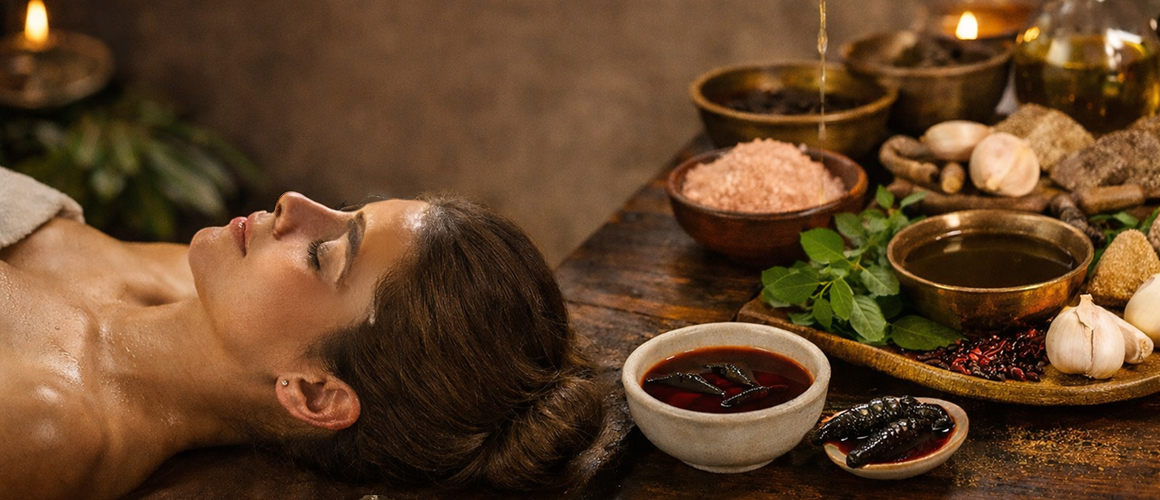
Have you ever felt like your body needs a complete reset not just a weekend rest, but a deep, cellular-level cleanse? That's exactly what Panchkarma, Ayurveda's most powerful detox therapy, promises to deliver. Rooted in over 5,000 years of traditional Indian medicine, Panchkarma is a structured, personalised detoxification process that clears toxins, restores balance, and revitalises the mind, body, and spirit. Whether you're new to Ayurveda or exploring natural wellness paths, this guide breaks down everything you need to know.
The word Panchkarma comes from Sanskrit — Panch meaning "five" and Karma meaning "actions" or "procedures." Together, it refers to five therapeutic procedures designed to eliminate deep-rooted toxins (called Ama in Ayurveda) from the body's tissues.
Unlike a typical spa detox or juice cleanse, Panchkarma is a medically guided Ayurvedic process. It works on the principle that accumulated toxins from poor diet, stress, environmental pollution, and unhealthy lifestyle choices disrupt the body's three doshas: Vata, Pitta, and Kapha. When these doshas fall out of balance, disease and discomfort follow.
Panchkarma doesn't just suppress symptoms. It addresses the root cause by physically removing toxins from the body through a series of preparatory and primary treatments, making it one of the most holistic and thorough detox systems ever developed.
Each of the five therapies in Panchkarma targets specific channels and organs in the body. Here's a breakdown:
Vamana involves medically induced vomiting to expel excess Kapha toxins from the stomach and respiratory tract. It is especially beneficial for people suffering from chronic cough, asthma, or skin conditions. This is not casual purging — it is a carefully monitored process carried out after days of preparation.
Virechana uses herbal laxatives to cleanse the small intestine and purge excess Pitta from the liver, gallbladder, and gastrointestinal tract. It is highly effective for managing digestive disorders, liver issues, chronic skin diseases, and inflammatory conditions.
Considered the king of Panchkarma therapies, Basti involves administering medicated oils or herbal decoctions through the rectum. It primarily balances Vata dosha and is used to treat constipation, arthritis, neurological disorders, and reproductive health issues. Basti is often the most frequently prescribed of the five procedures.
Nasya involves administering herbal oils, powders, or juices through the nasal passages to clear and cleanse the head and neck region. It is highly effective for sinusitis, migraines, hair fall, premature greying, and improving mental clarity. The nose is considered the "gateway to the brain" in Ayurveda.
Raktamokshana is the process of purifying the blood by removing a small quantity of it. This can be done using leeches (Jalaukavacharana) or surgical instruments. It is used to treat skin disorders, gout, enlarged liver or spleen, and certain inflammatory conditions. This therapy is less commonly prescribed today but remains part of classical Panchkarma.
A complete Panchkarma experience isn't just about the five procedures — it follows a structured three-stage protocol:
Stage 1 – Purva Karma (Preparatory Phase)
Before the main detox begins, the body must be prepared. This involves:
Stage 2 – Pradhana Karma (Main Treatment Phase)
This is where the five Panchkarma therapies are administered based on the individual's constitution (Prakriti) and health condition. A qualified Ayurvedic physician decides which therapies are appropriate and in what order.
Stage 3 – Paschat Karma (Post-Treatment Phase)
After detox, the body is in a sensitive state. This phase includes:
Panchkarma is not a one-size-fits-all treatment. It is recommended for people dealing with:
Panchkarma is also a powerful preventive health tool — you don't have to be unwell to benefit. Many people undergo it as a seasonal cleanse to reset their system, particularly during the transition between seasons.
If you're exploring holistic wellness options, you might also want to read about Ayurvedic daily routines (Dinacharya) and how they complement a Panchkarma program for long-lasting health.
If you're considering your first Panchkarma experience, here's what a typical program looks like:
It's worth noting that Panchkarma should always be done under the supervision of a trained Ayurvedic practitioner, not attempted at home. The preparatory and post-treatment phases are just as critical as the treatments themselves.
When done correctly and under proper guidance, Panchkarma offers a wide range of benefits:
To understand more about how Ayurvedic treatments work holistically, you can explore our guide to understanding your dosha type and how it shapes your personalised wellness plan.
While Panchkarma is safe for most healthy adults, there are certain conditions under which it should be avoided or approached with caution:
Always consult a qualified Ayurvedic physician before starting any Panchkarma program to ensure it is safe and suitable for your specific health condition.
Panchkarma is far more than a detox trend — it is a time-tested, scientifically grounded system of healing that works at the deepest levels of the human body. From its five powerful therapeutic procedures to its structured three-stage protocol, Panchkarma offers a comprehensive path to renewed vitality, balanced doshas, and lasting wellness. Whether you're battling a chronic health condition or simply looking to invest in preventive care, a well-guided Panchkarma program could be the reset your body has been waiting for. If you're ready to begin your Ayurvedic journey, explore what a personalised Panchkarma experience looks like at Muktaa.
A standard Panchkarma program typically lasts between 7 and 21 days. The duration depends on your health condition, dosha imbalance, and the specific therapies recommended by your Ayurvedic doctor. Shorter 3–5 day introductory programs are also available for beginners.
No. Panchkarma should only be performed under the supervision of a qualified Ayurvedic practitioner. The therapies involve medicated substances and precise procedures that require clinical expertise. Attempting them at home can be unsafe and ineffective.
According to Ayurveda, seasonal transitions — particularly autumn and spring — are ideal times for Panchkarma. These periods naturally align with the body's detoxification cycles and make the therapies more effective.
Most Panchkarma therapies, especially the preparatory ones like oil massage and steam, are deeply relaxing. Some procedures like Vamana may cause temporary discomfort, but they are always medically supervised and carried out in a controlled manner to ensure your comfort and safety.
A spa detox typically focuses on surface-level relaxation and temporary wellness. Panchkarma is a medically designed Ayurvedic detoxification system that works at a cellular level, targeting the root cause of toxin accumulation and restoring doshic balance. It is personalised, physician-guided, and far more comprehensive than a standard spa treatment.


 Visit Us